Green
Manage in your chair
Education, self-care and splinting where indicated, with structured review.
The 5-Step TMD Protocol for Dental Professionals
Developed specifically for dental professionals and taught in person over two supervised days. Build a broader musculoskeletal lens, make better splint and referral decisions, and add hands-on joint and muscle skills suited to the dental chair.
27–28 February 2027 Melbourne 15 CPD hours
The jaw is the starting point.
The patient is the whole picture.
A protocol you can use from Monday
TMD can involve more than a painful muscle or a noisy joint. This course brings a musculoskeletal perspective into the dental setting, connecting jaw findings with cervical function, breathing and airway signs, self-care and everyday function.
Across two days, you’ll use the 5-step pathway to assess, triage and act—then practise supervised muscle and TMJ joint techniques and apply your reasoning to clinically relevant cases.
The course pathway
Choose a step to see what you’ll explore.
Begin with the story
Use a focused conversation to understand the patient’s symptoms, function and relevant history before deciding what needs closer assessment.
Targeted history-taking · recognising when further assessment is needed
The Traffic Light System
A practical, colour-coded framework for choosing the safest next step for each patient, taught and applied through clinical cases during the course.
Education, self-care and splinting where indicated, with structured review.
In-scope care, with early co-management or referral and close reassessment.
Prompt referral and coordinated care when the presentation requires it.
You don’t need a final diagnosis to start using it. The course teaches you how to assign each colour and when the clinical picture requires a different response.
The hands-on component
Extensive supervised practicals run across both days—most of Saturday afternoon and most of Sunday.

Learn controlled TMJ joint mobilisation—including long-axis distraction, anterior glide and lateral glide—and how to select and apply techniques within a reasoned, conservative approach.
Practise extraoral and intraoral techniques for muscles involved in jaw function, linking examination findings to an appropriate treatment choice and patient response.
Work through case studies that connect the interview, examination, differentiation, clinical triage and decisions about treatment or referral.
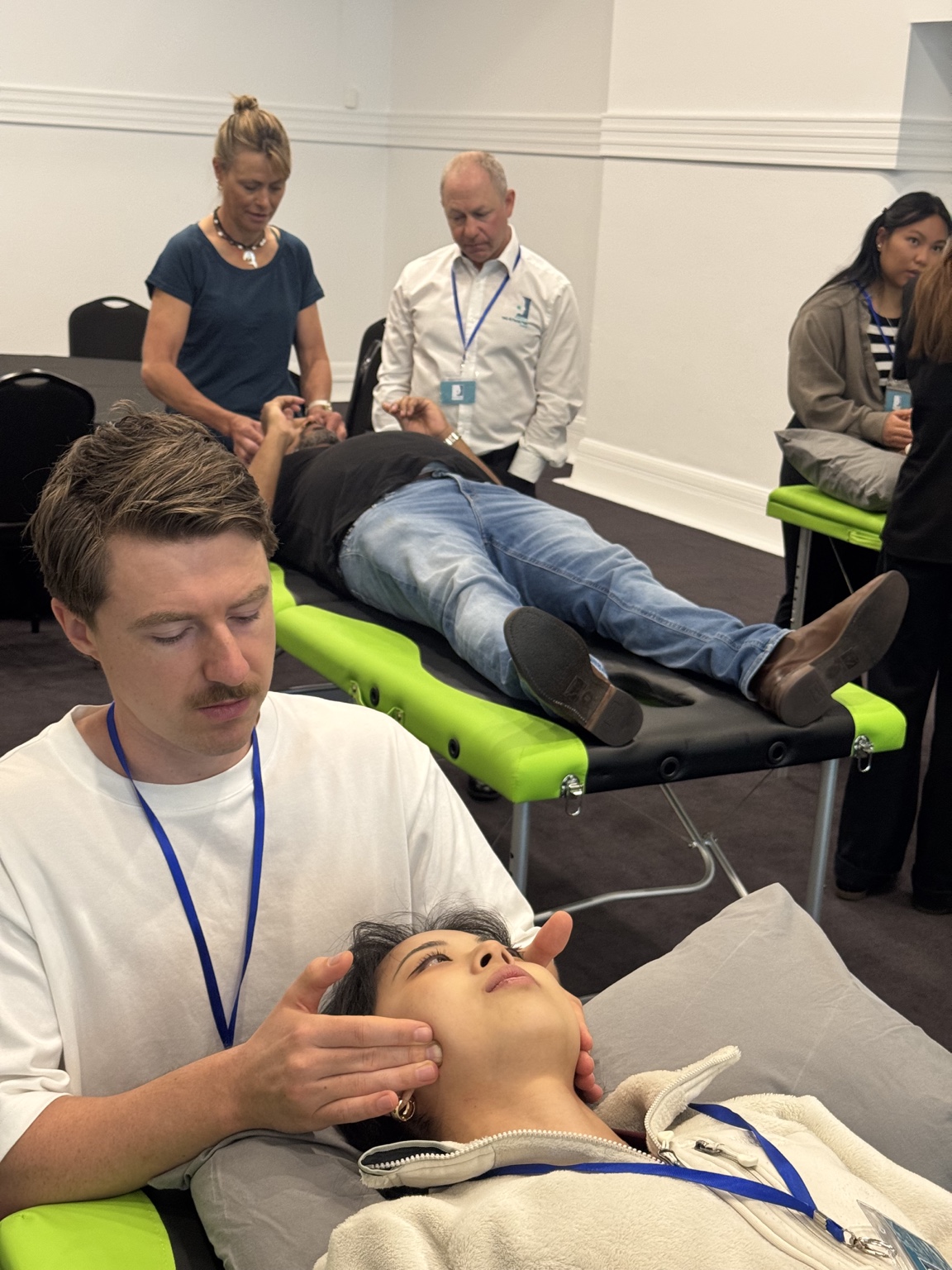
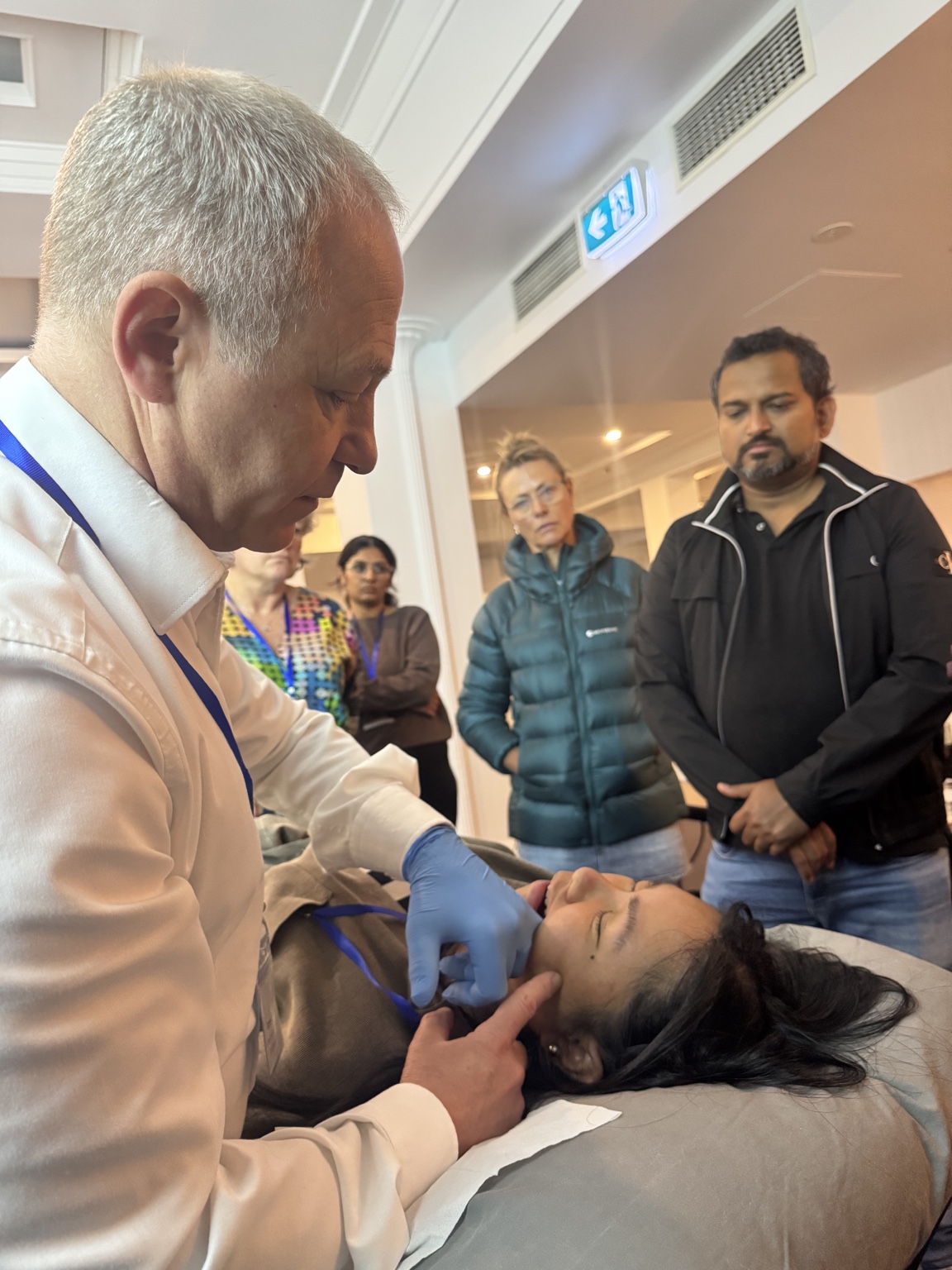
The course teaches low-force, controlled techniques within physiological limits; high-velocity TMJ thrust techniques are not taught. Participants remain responsible for applying skills in line with their registration, competence, workplace policies and professional indemnity arrangements.
The wider view
Explore some of the areas the course brings into your clinical reasoning. These are topics for learning, not a patient assessment tool.
Look beyond the site of pain to examine how the joint and muscles are functioning, and how movement findings fit with the patient’s story.
How the weekend unfolds
Each part of the course builds toward safer, more confident decisions in the dental setting.
Building on the morning’s exploration of TMJ mechanics and the wider influences on jaw function, the afternoon moves into predominantly supervised hands-on assessment practice.
The majority of the day is supervised practical work.
From course participants
“It gave me the practical skills and confidence to better help my TMD patients.”
“I feel more confident in diagnosing and helping my patients with TMD.”
Delivering a five-hour practical TMD masterclass within Dr Damian Teo’s TMD & Sleep Mini-Residency.
Member of a four-person lecture team delivering a TMJ course for qualified dentists through Melbourne Dental School in 2018 and 2019, with the programme continuing online in 2020. The team comprised Darron, a specialist prosthodontist, an oral medicine specialist and an oral and maxillofacial surgeon.
Your educator
Physiotherapist · Founder & Clinical Director
Melbourne TMJ & Facial Pain Centre
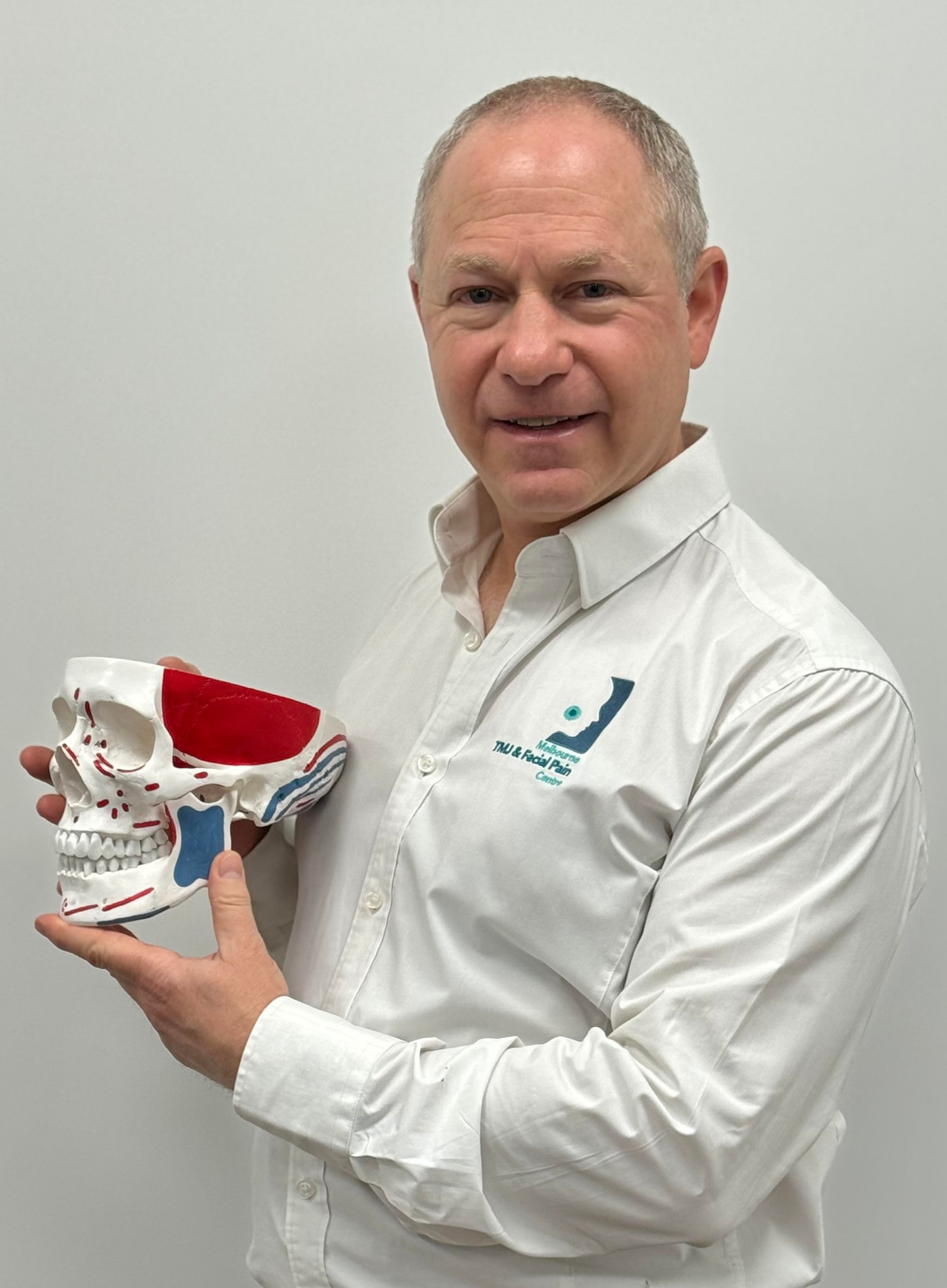
With more than 30 years’ experience as a physiotherapist, Darron brings a practical musculoskeletal and multidisciplinary perspective to TMD education. He is the Founder and Clinical Director of Melbourne TMJ & Facial Pain Centre, a multidisciplinary clinic that has cared for more than 15,000 patients since 2018. His teaching helps dental professionals broaden their clinical lens, develop hands-on joint and muscle skills, and make clearer decisions about in-scope care, co-management and referral.
27–28 February 2027 · Melbourne
The Victoria Hotel, Melbourne
15 total CPD hours
Fully catered, with a printed workbook reference guide
Designed for: dentists, oral hygienists, oral health therapists, dental therapists and orofacial myofunctional therapists.
Early bird
$1,799Register by 31 December 2026 and pay within three business days of receiving your payment link.Regular rate
$1,999Per participantGroup booking discounts
Registration
Complete the form below to receive a Stripe payment link by email. Your place is confirmed once full payment has been received. The course is capped at 30 participants, with a minimum of one practical supervisor for every 10 participants.
Complete the registration form
Viewing on another device?
Scan the QR code or visit tally.so/r/w4VqLO
Register now
Complete your details below. You will receive the payment link by email.
If the form does not display, open the registration form directly.
View the full course details on the Melbourne TMJ & Facial Pain Centre website.